Hanmi Captures Attention at ADA 2026 with New Muscle-Gaining Obesity Drug Candidate HM500197
Hanmi Captures Attention at ADA 2026 with New Muscle-Gaining Obesity Drug Candidate HM500197
Eight Research Presentations Highlight Hanmi's Differentiated Obesity Pipeline
Global Interest Grows Around HM17321 and Newly Unveiled HM500197
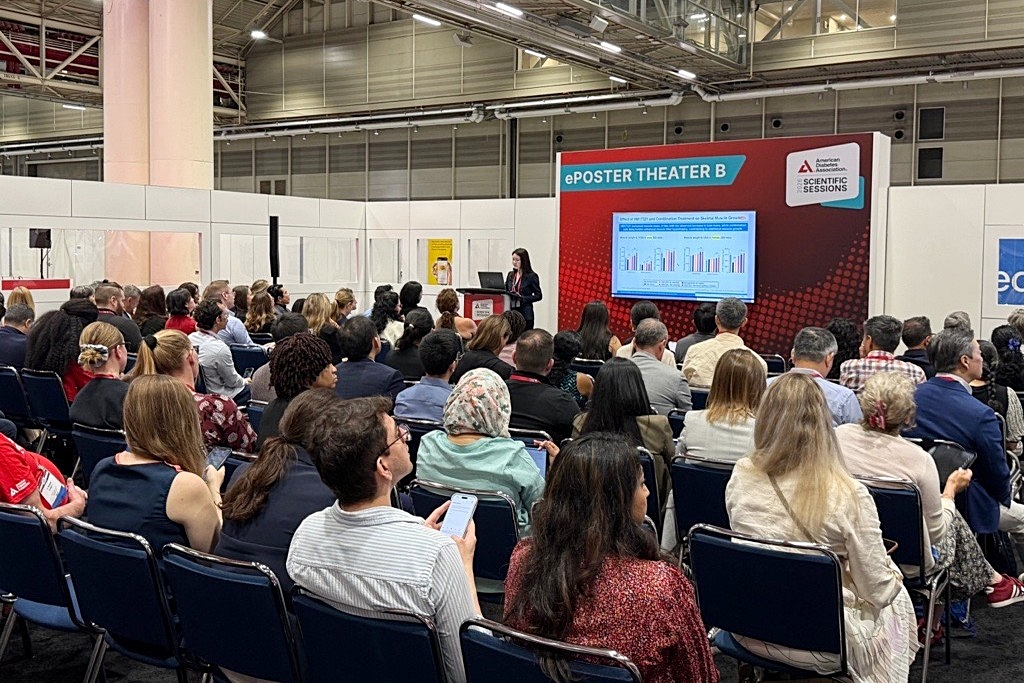
(June 16, 2026) Hanmi Pharm. Co., Ltd. (“Hanmi”), which recently drew significant attention through a major licensing agreement with a global pharmaceutical company, once again generated strong interest at ADA 2026 by unveiling its second muscle-gaining obesity drug candidate, HM500197 (LA-MSTN), for the first time.
At the American Diabetes Association (ADA) Scientific Sessions 2026 held in New Orleans, attendees gathered in large numbers to learn more about Hanmi's innovative obesity pipeline. The presentation sessions drew full audiences, reflecting strong interest from researchers and representatives of leading biopharmaceutical companies.
Researchers and representatives from leading global biopharmaceutical companies showed particular interest in the development strategy, key differentiators, and preclinical findings of HM17321 and HM500197. Following the presentations, discussions continued around future development plans and commercialization strategies, with several companies requesting separate meetings with Hanmi researchers.
In the obesity and metabolic disease field, high-quality weight loss―reducing fat mass while preserving or enhancing muscle―has emerged as one of the most important next-generation treatment goals.
While GLP-1-based therapies have demonstrated effective weight-loss outcomes of approximately 15-20%, studies have reported that up to 40% of the weight lost may be attributable to muscle loss. Excessive skeletal muscle loss can lower basal metabolic rate and contribute to weight regain after treatment discontinuation, highlighting the need for new therapeutic approaches.
As a result, growing attention has been directed toward therapies targeting the myostatin and activin pathways involved in muscle growth. However, current industry approaches remain largely limited to antibody and Fc fusion protein-based candidates.
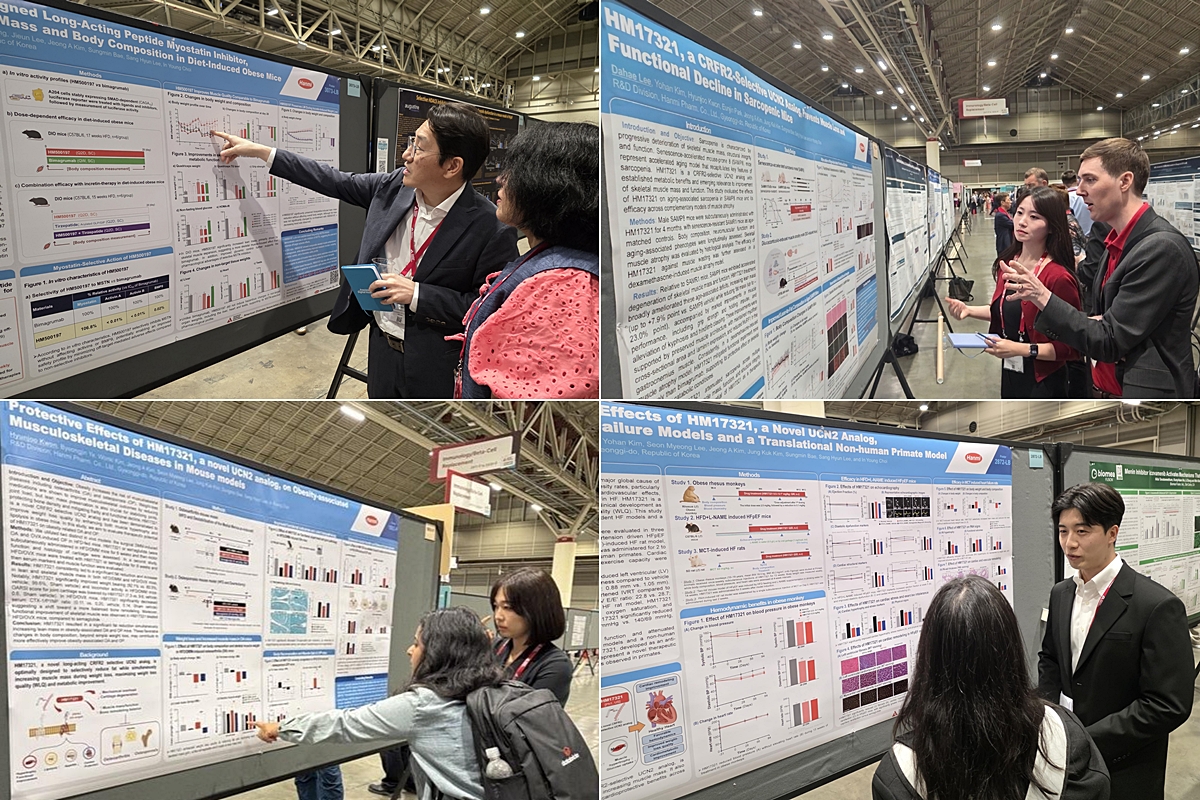
Unlike these approaches, HM500197, the world's first peptide-based long-acting myostatin inhibitor, was designed to selectively inhibit myostatin while increasing skeletal muscle-focused lean mass. As a peptide-based molecule, HM500197 offers the potential for more convenient development as either a combination therapy or combination formulation with incretin-based treatments.
At ADA 2026, Hanmi presented data demonstrating that HM500197 exhibited myostatin inhibitory activity comparable to bimagrumab, an antibody-based muscle-preserving therapy, in in vitro studies. Notably, no inhibitory activity against off-target cytokines was observed, supporting its high degree of myostatin selectivity.
In vivo studies further demonstrated superior skeletal muscle-selective lean-mass enhancement compared with bimagrumab while minimizing off-target activity, suggesting a differentiated safety profile.
Particularly noteworthy were findings from diet-induced obese mouse models, where HM500197 increased lean mass in a dose-dependent manner, with selective increases in skeletal muscle mass. When administered in combination with a GLP-1-based therapy, HM500197 effectively prevented muscle loss while promoting fat-focused weight reduction, providing scientific support for its potential as a high-quality weight-loss therapy.
Hanmi also presented seven additional studies on HM17321, the world's first muscle-gaining obesity therapy currently undergoing a Phase 1 clinical trial in the United States. These presentations explored not only its combination potential with multiple therapeutic modalities but also provided deeper insights into its mechanism of action and potential therapeutic applications in musculoskeletal, cardiovascular, and renal protection areas.
HM17321 is fundamentally differentiated from conventional obesity therapies in that it aims to simultaneously deliver fat reduction, muscle gain, and improvements in exercise function and metabolic function, rather than focusing solely on weight loss.
Dr. In Young Choi, Head of Hanmi's R&D Division, said, "Beginning with efpeglenatide, Korea's first independently developed obesity therapy, Hanmi has established a differentiated obesity portfolio through the H.O.P (Hanmi Obesity Pipeline) project, which now includes our next-generation triple agonist HM15275 (Phase 2), HM17321 (Phase 1), and HM500197. Together, these programs further strengthen Hanmi's tailored obesity treatment portfolio." He added, "Our two muscle-gaining obesity pipelines have the potential to become game-changing therapies that address limitations of currently available treatments and help establish a new treatment paradigm for obesity."